Posts

How Should I Clean My Eyes?

Image
Dirt gets in your eye, or you accidentally squirt nail polish into it. You wake to find your peepers full of pus or mucus. You wash your body with soap and water. But what’s the right way to clean your eyes? If you get something in your eye, it can be a little uncomfortable or be very painful. The best way to wash it out depends on what it is. Act quickly so you can prevent any damage to your eye and vision. Chemicals Lots of household chemicals can hurt your eyes. They include bleach, drain cleaners, fertilizers, dishwater powder, glass polish, and lime products like plaster and cement. Flush it. Rinse your eye with cool water or saline solution right away for at least 15 minutes. You can do this over a sink or in the shower. If you wear contacts, take them out, but don’t stop rinsing your eye while you do it. Get advice . When you finish rinsing, call your local poison control center or the national hotline at 800-222-1222. They can tell you what to do next...
What Your Eyes Say About Your Health?

Image
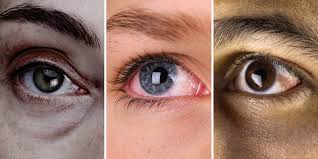
Do you ever look in the mirror and see that your eyes are red? Or droopy? Or extra crusty? Sometimes a cold compress and a trip to the drugstore are all you need. Other times, it's a good idea to see your doctor. How can you tell the difference? A sneak peek at some common conditions will help you know if it’s something minor or worth a second look. Redness “I think the most common eye problem people experience is a red eye,” says Rebecca J. Taylor, MD, an ophthalmologist in Nashville. “A red eye with a blotch of blood on the white part of the eye may look really scary, but it’s usually just a bruise under the surface of the eye. We call it a subconjunctival hemorrhage." It should clear up in a few weeks, she says. If both eyes are red, itchy, and watery, that could just be allergies, Taylor says. These symptoms, are usually caused by environmental (seasonal) allergies, but they could mean you’re allergic to a product you used. Over-the-counter tears wi...

EYE CARE WITH CARE

Image
Your eyes are beautiful, taking care of them; eye care is dutiful Eyes being the adorable part of your body catches their attentionat first  sight. Eye Care is the best care unit for your family, providing you the specialist advice, utmost  care , all the technologies under a single roof.  For the eyes that are  still blooming to adore the world, we have a paediatric eye care unit. For the eyes that preserved the experiences to guide the generations, we have a geriatric eye care unit. To salvage the naturallens that are meant to capture the moments for life, we utilize all the technologies we have at your service. Dr. Birendra Jha is one of the eminent ophthalmologist in the central India, MBBS- MS in ophthalmology. With 14 year of overall experience , he is expert at performing eye surgeries with latest interventions and techniques . A brilliant Phacosurgeon  and eminent paediatrician eye  care surgeon . He has been doing all sort of ...

Vision strengthens your dreamy path, and we at eye care strengthen your vision

Image
Eyes being the most delicate sense organ needs utmost care. A human eye is protected by multiple layers but still get affected by pathological or accidental damage. Your eyes connects you to the outer world thus it is essential to take care of your eyes. Healthy eyes need proper care and to preserve them from diseases a complete eye care unit to identify and omit the disease at an early stage. A comprehensive eye care, hygienic pampering, high quality and reliable eye wears is what we provide you all at a single place . Keep your eyes safe, need any guidance; Visit Us: Take a healthy meal, Vitamin A and other nutrient rich diet. Stay hydrated , keep a check on your weight Do easy ocular  muscles exercises. Cover your eyes and protect them from excessive heat and dust. Check out if you have any disease in your lineage Give your eyes appropriate rest from flashing lights Identify the red flags Visit us for regular  check- ups Our eye centre provides you ...

GLAUCOMA–SILENT THIEF OF SIGHT

Image
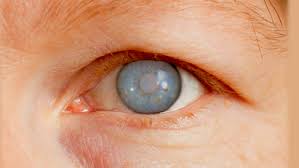
Glaucoma is the leading cause of blindness mostly in elderly population . It is a silent, painless, progressivedisease that worsens with age in turn  affects the optic nerve and have a tendency to follow the lineages. The condition many a times remain asymptomatic and then at sudden speed up from vision loss to permanent total blindness. What can lead to Glaucoma? This often happens due to raised intraocular  pressure  that in turn is result of multiple pathological conditions or due to physiological ageing.  The channel through which aqueous humor in eye gets blocked at times and this results in stagnation of fluid; this build up the intraocular pressure resulting in compression of option nerve ; thus glaucoma. There are other causes that have less chances to land up in glaucoma which can be injury to eye by a blunt object, infections of eye , chemicals in eye , ischemic end arteries of eye or severe inflammation.  Who are more prone? ...

SQUINT

Image
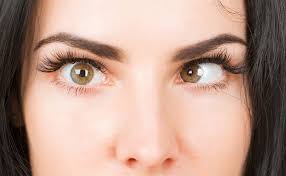
Medically known as strabismus, squint is a very common Ophthalmological issue in which the eyes shows disturbed alignment.The affected eye does not sync with the focus and turn in either direction. The squint may show constant or intermediate effect on gaze. Why does this happen: The extra ocular muscles of eyes are responsible for eye movements,  especially the eye ball. Interruption in working or either the muscles or the nerve supplying them results in the misalignment  of gaze. In some cases it may be due to the underlying neurological problems that results in incoordination , an injury to cranial nerve, due to a refractive defect or may  be an inherited defect. In cases of neurodevelopmental disorders like hydrocephalus or infections such as  measles. The alarming symptoms : It can be detected at a young age either since birth or in initial 6 months when one eye does not look straight to a greater extent,  Cross eye phenomena can be mar...

Contact Lenses and Eye Infections

Image
Contact lenses are a convenient and comfortable alternative to eyeglasses for many people. But you can't wear them all the time. And if you don't clean and care for them correctly, you're more likely to get eye infections. People who wear contact lenses have a higher risk for keratitis, an infection of the cornea, the clear outer covering of your eye. They're also called corneal ulcers. Viruses, bacteria, fungi, and a rare but serious eye parasite can cause keratitis. It's also easier for you to catch pinkeye, or conjunctivitis, when you wear contacts. These infections come from a bacteria or virus in the thin membrane covering the white part of your eye and the inside of your eyelids. Eye Infection Symptoms Stop wearing your contact lenses immediately if you have these symptoms: Redness Swelling Extra tears or sticky, gooey stuff from your eye Blurry vision Light sensitivity Itching, burning, or a feeling that something's in your ey...